

An independent business valuation is an impartial assessment of what your company is worth, carried out by a qualified adviser with no stake in the outcome. Owners commission one for a sale, a fundraising round, a Capital Gains Tax or Inheritance Tax event, a shareholder dispute, or simple planning. Credible work follows International Valuation Standards (IVS) and, for tax matters, aligns with HMRC’s Shares and Assets Valuation (SAV) process.
TL;DR:
- Use market multiples when comparable deals exist, income models when forecasts drive value, and asset value mainly as a floor for asset heavy or distressed firms.
- A defensible report states its scope, basis, and valuation date, explains assumptions and data sources, reconciles methods, and discloses the valuer’s independence and qualifications.
- For unquoted share taxes, SAV negotiates valuations, may involve the Valuation Office Agency when property drives value, and unresolved cases can reach tribunal.
- Match the scope to the valuation’s purpose: desktop reviews suit planning, while full reports with modeling and reconciliation better withstand buyer or HMRC scrutiny.
Table of Contents
- Why you might need an independent valuation
- The three principal valuation approaches, explained simply
- What a defensible, independent valuation report contains
- Tax and regulatory considerations: HMRC SAV and market value for unquoted shares
- Typical timeline and costs for commissioning an independent valuation
- How to choose an independent valuer: credentials, engagement letter and questions to ask
- How to use a valuation in practice: sale, fundraising, tax and disputes
- How to prepare your business documentation and financials for a smooth valuation
- Understanding independence and conflict of interest in choosing a valuer
- Post-valuation steps: reviewing, challenging or updating the report
- How independent valuation differs from internal or management valuations
- What an ICAEW chartered adviser sees most often in valuation work
- Getting an independent valuation done properly with Consult EFC
- FAQ
- Sources
Why you might need an independent valuation
A valuation only earns its keep when it answers the question the situation actually asks. The headline enterprise value quoted in a sale conversation is rarely the figure that lands in your account: completion mechanics, net debt adjustments and working capital targets turn that number into a final equity value, and a buyer’s advisers will test every assumption behind it.
Fundraising runs on a different logic. Investors want to see how your numbers were built, not just what they total, so the valuation needs to connect cleanly to your financial model and forecast assumptions rather than stand alone as a single figure.
Tax events carry their own discipline. A share transfer, gift or restructuring can trigger Capital Gains Tax or Inheritance Tax liabilities, and HMRC expects a defensible, documented valuation rather than a round-number estimate.
- Sale: supports negotiation and withstands buyer due diligence on completion mechanics.
- Fundraising: gives investors evidence behind the numbers, tied to your forecasts.
- Tax: produces documentation HMRC can test for Capital Gains Tax or Inheritance Tax purposes.
- Disputes and exits: offers impartial evidence for negotiation or tribunal proceedings.
- Internal planning: benchmarks progress and flags what needs fixing before an exit.
The three principal valuation approaches, explained simply
Professional valuers do not pick a method at random. International Valuation Standards group business valuation into three principal approaches, each suited to a different kind of evidence.
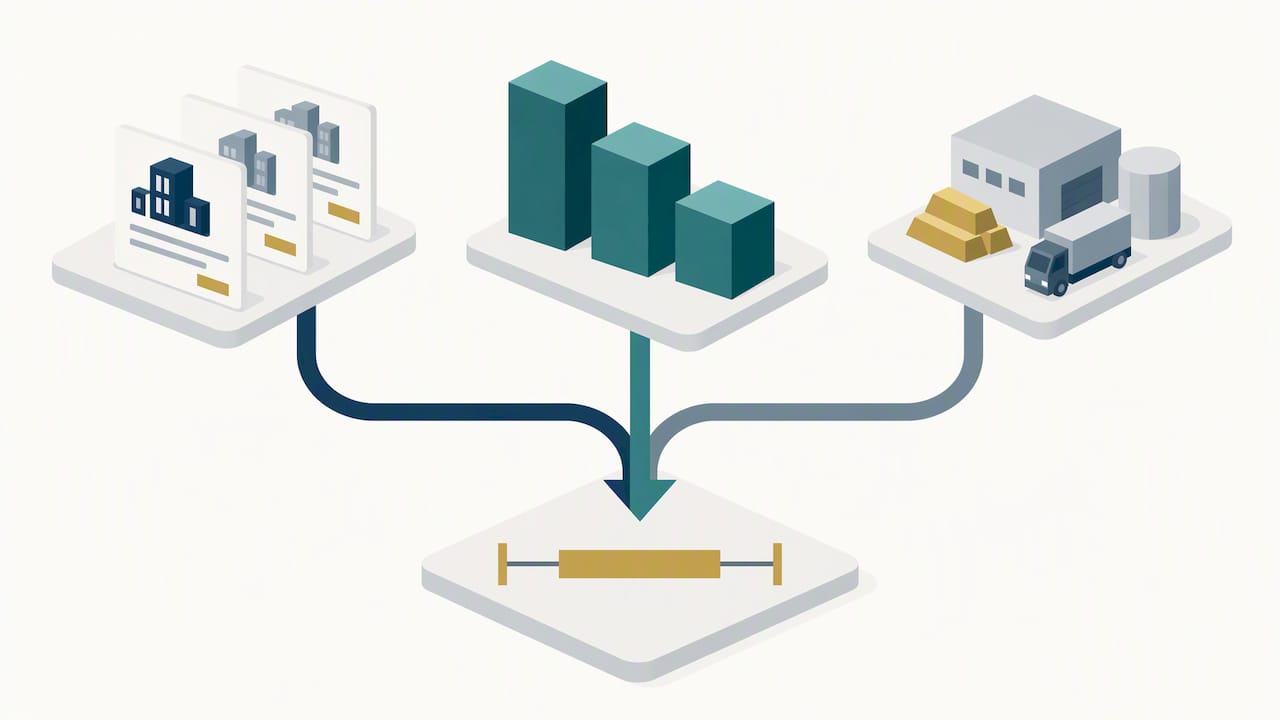
The market approach compares your business against guideline transactions or listed comparables, usually expressed as a multiple of EBITDA or revenue. It works best where there is observable market data: enough comparable deals or quoted peers to anchor a multiple with confidence.
The income approach values a business on the cash it is expected to generate, typically through a discounted cash flow (DCF) model or a capitalisation of earnings. This approach dominates when future performance, not past transactions, drives value, which is common for growing SaaS and service businesses where forecasts matter more than historic comparables.
The cost or asset-based approach values the underlying net assets, often as a floor rather than a primary indicator. It carries more weight for asset-heavy businesses, property-holding companies or firms in distress, where earnings potential is limited or uncertain.
A properly prepared report rarely applies all three with equal weight. Valuers reconcile the outputs, explaining why one approach was given more credence given the available data and the purpose of the valuation.
- Market approach: uses price/EBITDA or price/revenue multiples from comparable transactions.
- Income approach: builds a DCF or capitalisation model around projected cash flows and a discount rate.
- Cost approach: measures net asset value, useful as a downside check or for asset-heavy companies.
Understanding how comparables are sourced also helps you judge the quality of a market-based valuation; a clear explanation of industry benchmarking shows how benchmark data is gathered and why it needs careful adjustment before it applies to your business.
Pro Tip: Ask which multiples were used and why; a multiple pulled from a different sector or a much larger company will distort the result, and a DCF is only as reliable as the forecast behind it.
What a defensible, independent valuation report contains
A valuation report that holds up under scrutiny from buyers, investors or HMRC shares a common structure. ICAEW guidance on business and share valuation stresses that the assignment must be clearly defined before any numbers are produced.
- Scope of work, basis of value and valuation date, set out at the start so every party knows what was valued and why, in line with IVS scope requirements.
- Approaches used and data sources, including the discount rates, multiples and growth assumptions applied, so a reader can test the logic rather than take the conclusion on trust.
- Reconciliation of approaches into a single conclusion, with an explanation of how each approach was weighted.
- Supporting documentation, including historic accounts, forecasts, asset schedules and the comparable transactions or companies used.
- A statement of independence, the valuer’s qualifications, and any specialist inputs (property, IP or pension advice) brought into the exercise.
International Valuation Standards require a documented scope of work and disclosure of the valuer’s compliance with the standard, along with professional competence and ethical conduct. A report missing any of these elements is harder to defend if challenged, whether by a buyer’s lawyers, an investor’s finance team or HMRC.
Tax and regulatory considerations: HMRC SAV and market value for unquoted shares
Tax valuations sit under a specific legal definition. HMRC’s internal manual defines market value as the price an asset would reasonably fetch in a sale on the open market between a hypothetical willing buyer and seller, and for unquoted shares, Capital Gains Tax and Inheritance Tax valuations are often referred to HMRC’s Shares and Assets Valuation (SAV) team.
SAV handles valuations for unquoted shares and related specialist assets, and runs the Post Transaction Valuation Check process, which lets you confirm a valuation with HMRC after a transaction using a form such as CG34.
- SAV typically negotiates the figure rather than simply accepting or rejecting it once it has full information.
- Where property or other underlying assets substantially determine share value, SAV may bring in the Valuation Office Agency to assess open market value.
- Agreement is usually reached within weeks once SAV has everything it needs, though complex cases take longer.
- Unresolved disagreements can, in principle, proceed to tribunal, so documentation quality matters from the outset.
Because SAV engagement has its own procedure and paperwork, it is worth appointing an adviser who has handled these referrals before, rather than treating the tax valuation as a side task on top of a commercial one.
Typical timeline and costs for commissioning an independent valuation
Scope decides both timeline and price. A desktop review built mainly from financial statements and public comparables can turn around quickly; a full report with site visits, management interviews and a detailed financial model takes considerably longer.
- Desktop or indicative valuations are the fastest and cheapest option, suited to internal planning or an early fundraising conversation.
- Full valuation reports with modelling, comparable analysis and a written reconciliation take longer and cost more, but hold up better under buyer or HMRC scrutiny.
- Complexity drives fees: multiple business lines, intangible-heavy balance sheets, or messy historic accounts all add time.
- Record quality matters: clean, reconciled accounts and a working forecast shorten the process; gaps mean the valuer spends time chasing data instead of analysing it.
Agreeing the scope upfront, matched to what the valuation is actually for, is the most reliable way to control cost without under-serving the purpose.
How to choose an independent valuer: credentials, engagement letter and questions to ask
Choosing a valuer is as much about process as credentials, though credentials come first.
- Check qualifications: look for a chartered accountancy background (ICAEW or equivalent) or a recognised valuation credential, and confirm the adviser works to IVS.
- Ask for sample reports or references from similar sectors or transaction types, so you can judge the depth of the analysis before committing.
- Review the engagement letter carefully: it should state the scope, the basis of value, deliverables, timing, fees and confidentiality terms in plain language.
- Ask direct questions: where comparables came from, how the discount rate was derived, and whether the valuer has any conflict of interest in relation to your business or a counterparty.
Pro Tip: A valuer who cannot explain, in plain terms, why they chose one approach over another has probably not reconciled the methods properly, which is exactly the weakness a buyer’s or HMRC’s adviser will find first.
How to use a valuation in practice: sale, fundraising, tax and disputes
The report is a tool, not a finishing line. What you do with it depends on why you commissioned it.
- Sale: use the valuation as the anchor in negotiation, prepare for completion-account or locked-box adjustments, and expect the buyer’s team to test every assumption during due diligence.
- Fundraising: present the valuation drivers alongside your financial model and key performance indicators, since investors care more about the logic than the headline number.
- Tax: submit the report and its supporting evidence when dealing with HMRC or SAV, and be ready to answer follow-up queries on assumptions or comparables.
- Disputes: treat the report as evidence, which means being prepared to defend its assumptions if an independent expert is appointed or the matter goes to tribunal.
How to prepare your business documentation and financials for a smooth valuation
Preparation shortens the process and sharpens the result. Start with reconciled historic accounts, management accounts for the current period, and a forecast that reflects realistic assumptions rather than a best-case scenario.
Pull together a schedule of fixed assets, intangible assets such as intellectual property or customer contracts, and any outstanding liabilities that might affect net asset value. If your business holds property, get an up to date position on its market value, since this feeds directly into both the asset-based approach and any HMRC referral.
Normalise your earnings before the valuer starts: strip out one-off costs, owner’s discretionary expenses, and non-recurring income so the underlying trading performance is clear. A tidy cap table and clear record of any shareholder agreements also save time, particularly where a dispute or a fundraising round is the reason for the valuation.
The better the underlying data, the less time a valuer spends reconstructing it, and the more of the engagement goes into analysis rather than data-gathering. Owners who prepare this material in advance typically get a faster, more rigorous report for the same fee.
Understanding independence and conflict of interest in choosing a valuer
Independence is not a formality; it is what makes a valuation usable as evidence. A valuer with a financial interest in the transaction, an existing advisory relationship with the counterparty, or a fee structure tied to the outcome cannot credibly claim impartiality, however strong their technical work.
Before appointing anyone, ask directly whether they or their firm have any relationship with the other party to the transaction, whether their fee depends in any way on the valuation conclusion, and whether they have valued your business before in a way that might anchor their thinking. A reputable adviser will answer these questions without hesitation and disclose anything relevant in writing.
International Valuation Standards require valuers to disclose their compliance with the standard and to act with professional scepticism, which includes being transparent about any factor that could compromise objectivity. A valuation produced without that disclosure is weaker evidence in a dispute, a tax enquiry or a due diligence process, regardless of how polished the final document looks.
Post-valuation steps: reviewing, challenging or updating the report
A valuation report is not static once it is delivered. If a figure seems out of line with your expectations, the first step is to ask the valuer to walk through the assumptions and comparables behind it rather than disputing the headline number in isolation.
Where HMRC or SAV disagrees with a submitted figure, the usual path is negotiation, supported by further evidence if your adviser believes the original assumptions were sound. Only unresolved cases move towards tribunal, so a documented, well-reasoned report makes that stage far less likely.
Valuations also age. A report prepared well before a sale or funding round may no longer reflect current trading performance, so it is worth updating the work, particularly the forecast and any market multiples, before relying on it for a live transaction. Treat the valuation date as a snapshot: useful for the purpose it was built for, but not a figure to carry forward indefinitely without revisiting the underlying numbers.
How independent valuation differs from internal or management valuations
An internal or management valuation is prepared by people with a stake in the result, whether that is a founder keen to support a higher asking price or a finance team under pressure to justify a budget. The analysis might be technically sound, but it lacks the one quality a buyer, investor or tax authority actually needs: distance from the outcome.
An independent valuation is built by someone with no financial interest in the figure landing high or low, following a documented process that can be tested by a third party. That distinction is why HMRC refers unquoted share valuations to SAV rather than accepting a director’s own estimate, and why investors and acquirers routinely discount or disregard management-prepared numbers in negotiation.
The practical difference shows up in how much the report can be relied upon. A management valuation might be a useful internal planning tool, but when the figure needs to survive scrutiny in a sale, a funding round, a tax submission or a dispute, only an independent, standards-aligned report carries real weight.
What an ICAEW chartered adviser sees most often in valuation work
Owners underestimate how much a valuation’s credibility rests on documentation, not the headline figure. A scope that is vague about the basis of value or a report that skips the reconciliation between approaches is the first thing a buyer’s adviser or HMRC will pick apart, regardless of how carefully the multiple or discount rate was chosen. Investor-ready modelling matters for the same reason: numbers that connect cleanly to your forecast and KPIs survive negotiation, while a standalone figure invites challenge. An IVS-aligned process, properly documented from the scope of work onward, is what makes a valuation defensible rather than simply plausible.
— Kishen Patel
Getting an independent valuation done properly with Consult EFC
When you need a valuation that will actually hold up, whether that is for a sale, an HMRC submission or an investor conversation, we prepare Business Valuation UK reports and HMRC share valuations led by ICAEW Chartered accountancy standards, starting from £2,500 one-off.
Every engagement starts with a documented scope and basis of value, and ends with a report built to support scrutiny, not just satisfy a box on a checklist.
- Business Valuation UK and HMRC share valuations, for sale, tax or dispute purposes.
- Investor-grade financial modelling, linking valuation assumptions to your forecasts and KPIs.
- Fractional CFO and exit planning support, for owners who need ongoing financial leadership, not just a one-off report.
If you are weighing up a sale, a funding round or a tax event and want a valuation that stands on its own, get in touch to request a scoping conversation and we will set out exactly what the engagement involves.
FAQ
What is business valuation?
Business valuation is the process of estimating what a company is worth, using approaches such as market comparables, discounted cash flow or net asset value. The method chosen depends on the purpose, whether that is a sale, fundraising, tax or a dispute, and on which approach the available evidence best supports.
Can you get an independent property valuation?
Yes, property valuations follow a similar logic to business valuations and are carried out by qualified surveyors independent of either party in a transaction. Where a business’s value depends substantially on its property, HMRC’s Shares and Assets Valuation team may involve the Valuation Office Agency to assess open market value.
What is asset-based valuation?
Asset-based valuation values a business by reference to its net assets rather than its earnings or market comparables. It is one of the three principal valuation approaches recognised under International Valuation Standards, and it tends to matter most for asset-heavy or distressed businesses, often acting as a downside floor rather than the primary figure.
What are the main types of valuation methods?
Definitions vary, but most frameworks group specific methods, such as earnings multiples, discounted cash flow and net asset value, under the three principal approaches recognised by International Valuation Standards: market, income and cost. A defensible valuation report explains which methods were used and why, rather than listing every possible technique.
How do I know if my business valuation is defensible?
A defensible valuation documents its scope of work, basis of value and valuation date, states the data sources and assumptions behind each approach, and reconciles the approaches into one conclusion, as ICAEW guidance recommends. If a report is missing any of these elements, it is likely to face challenge from a buyer, investor or HMRC.
Sources
Recommended
- Business Valuation UK | Independent ICAEW Valuations
- Independent company valuation: the UK owner’s 2026 guide
- Business Valuation London | ICAEW Chartered Accountant
This article is for general information only and is not professional advice.
Not sure where your business stands right now?
Book a free 30-minute call with Kish. Bring your numbers, your questions, or just your situation. You will leave with a clearer picture than you arrived with.
Book a Free Strategy Call
Over 12 years across Big Four audit, Investment Banking, and corporate advisory. Kish works with SaaS founders, tech companies, and ambitious UK SMEs from £1M to £50M in revenue on fundraising, valuations, exit planning, and financial strategy. ICAEW regulated. Big Four trained. Based in London.