

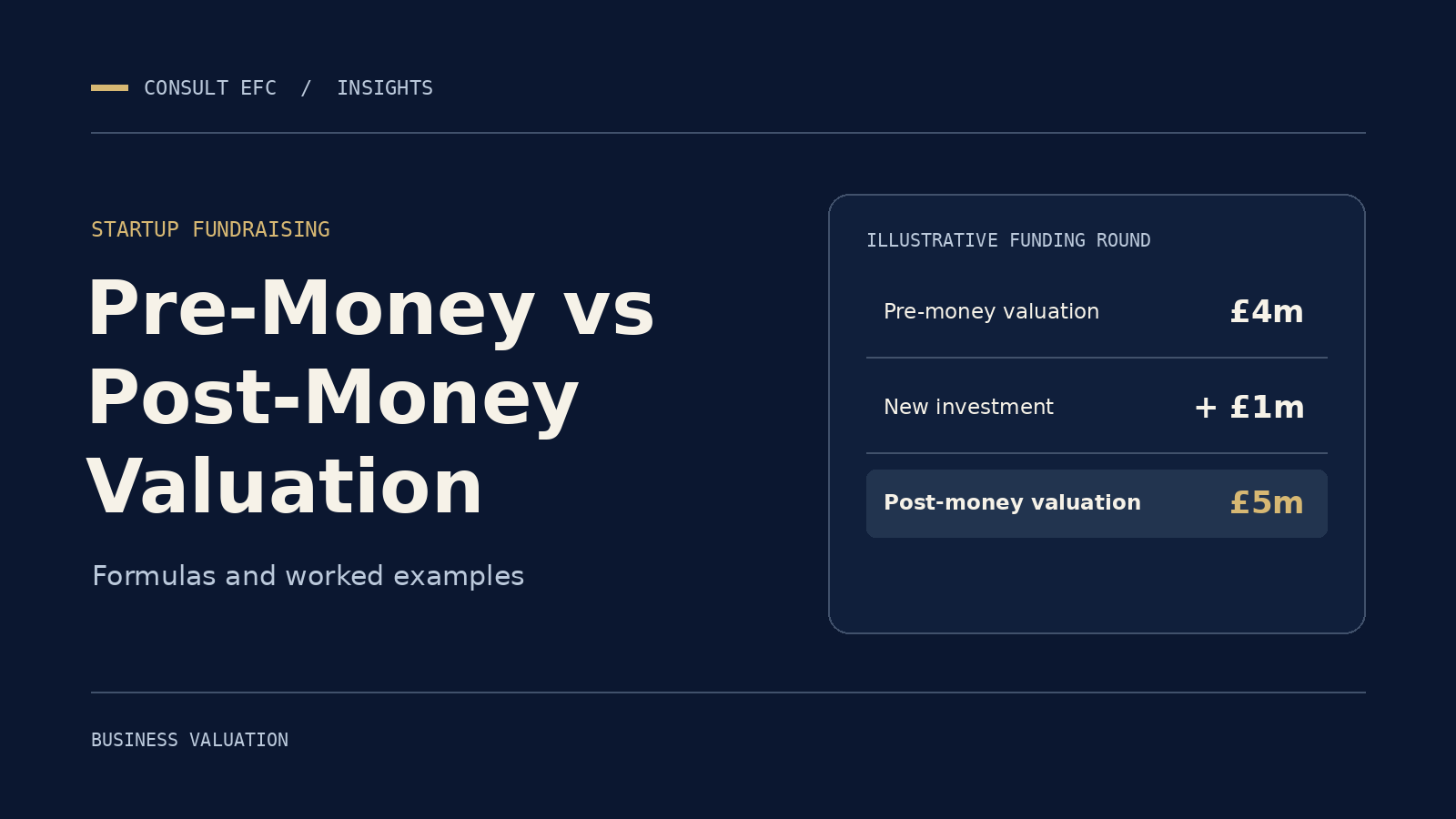
Pre-money valuation is what your company is worth immediately before an investor’s cash goes in. Post-money valuation is that figure plus the new investment. If an investor puts £2m into a company valued at £8m pre-money, the post-money valuation is £10m and the investor owns 20%. The rest of this guide shows how to calculate both, which one a UK term sheet usually quotes, and where the headline number misleads founders.
TL;DR
- Post-money valuation = pre-money valuation + new investment. Pre-money = post-money minus the investment.
- The investor’s ownership = investment ÷ post-money valuation. £2m on £10m post-money is 20%.
- Price per share = pre-money valuation ÷ shares in issue before the round, on the fully diluted basis you agree.
- Option pools, convertibles and anti-dilution terms can shift who bears the dilution, so read the whole term sheet, not just the headline figure.
- Always check whether an offer is stated pre-money or post-money before you compare it with another.
Table of Contents
- What pre-money and post-money mean
- How to calculate each figure
- Worked examples
- Pre-money or post-money: which does a UK term sheet quote?
- Where the headline number misleads
- Perspective
- How to prepare before you negotiate
- Support from Consult EFC
- FAQ
- Sources
What pre-money and post-money mean
The two terms describe the same company at two moments in a priced funding round. HSBC Innovation Banking defines pre-money valuation as the value immediately before new investment is added, and post-money as the value immediately after, with post-money equal to pre-money plus the new investment.
The British Business Bank explains that a term sheet carries both numbers: pre-money before the investment, and post-money including the amount invested. That is why the same deal can sound like two different valuations depending on who is talking.
The distinction matters because the investor’s money is not worth less or more by being counted. It simply changes the base against which ownership is measured. A founder who hears “£5m valuation” without the label has not yet heard a price.
How to calculate each figure
There are only three relationships to remember.
- Post-money = pre-money + investment.
- Pre-money = post-money − investment.
- Investor ownership = investment ÷ post-money.
The Angel Capital Association’s guide to valuing pre-revenue companies gives the same logic from the other direction: where an investor receives a stated percentage of the equity for their money, post-money is the money divided by that percentage, and pre-money is post-money less the money.
So if an investor offers £500,000 for 10%, post-money is £5m and pre-money is £4.5m.
From valuation to price per share
The valuation only becomes a share price once you know how many shares exist. In a UK venture transaction, the price per share is the pre-money valuation divided by the shares outstanding before the investment, and whether that count is fully diluted (including options, warrants and convertible securities) is a key negotiating point because it decides who bears the cost of dilution.
A simple illustration: £8m pre-money on 1,000,000 fully diluted shares gives £8.00 a share. A £2m investment then buys 250,000 new shares. The company now has 1,250,000 shares, the investor holds 250,000 of them, and 250,000 ÷ 1,250,000 is 20%.
Worked examples
Example 1: £8m pre-money, £2m raised
HSBC Innovation Banking uses this one: with £2m raised on an £8m pre-money valuation, post-money is £10m and the investor owns 20%, which moves existing shareholders collectively from 100% to 80%, assuming no other changes to the share structure.
Example 2: £10m pre-money, £2m raised
Ashfords sets out a case where £10m pre-money plus a £2m investment gives £12m post-money. The investor owns £2m ÷ £12m, or 16.67%. A bigger pre-money number does not make the investor’s percentage a round figure, so always compute it.
Example 3: a small UK raise
Wise’s UK guide describes a Kent-based start-up with a £1.1 million pre-money valuation raising £400,000, giving a £1.5 million post-money valuation. The investor’s stake is £400,000 ÷ £1.5m, about 26.7%.
Example 4: share counts that do not change
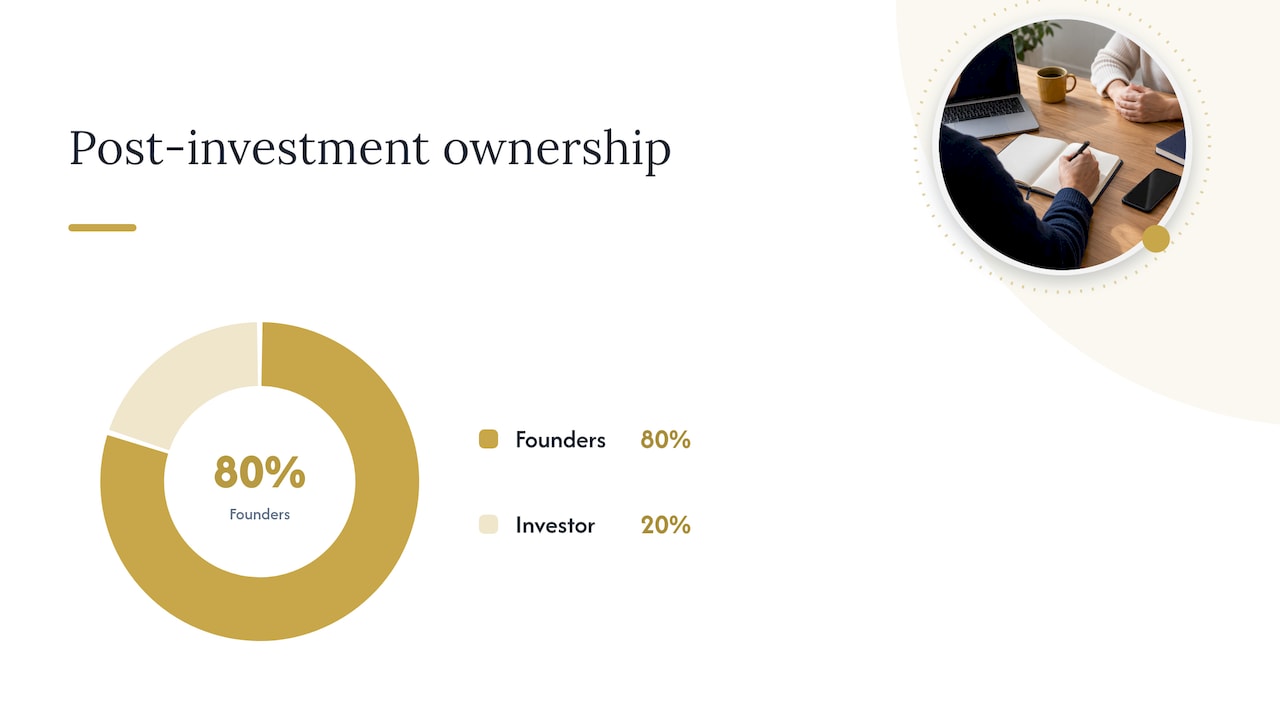
The British Business Bank’s example is useful because founders’ shares stay constant. Founders hold 1m shares and an investor puts in £1m for 20% post-money. Post-money is £5m, total shares become 1.25m, and the founders’ 1m shares are now 80% of the company. Nothing was taken from the founders; the pie simply grew around them.
Pre-money or post-money: which does a UK term sheet quote?
UK valuations are commonly discussed on a post-money basis, but you should never assume it. Always ask for the offer in both forms and confirm in writing. A £4m headline can mean a £3m pre-money company (post-money framing) or a £4m pre-money company (pre-money framing). With a £1m cheque, that is the difference between selling 25% and selling 20%.
When you compare competing offers, convert them all to the same basis first:
| Offer as quoted | Investment | Pre-money | Post-money | Investor stake |
|---|---|---|---|---|
| £4m post-money | £1m | £3m | £4m | 25% |
| £4m pre-money | £1m | £4m | £5m | 20% |
| £6m pre-money | £1.5m | £6m | £7.5m | 20% |
| £6m post-money | £1.5m | £4.5m | £6m | 25% |
The arithmetic is ours and follows the formulas above. Two offers that look close on paper can leave you with very different ownership once converted.
Pre-money and post-money framing also matters for convertible instruments. A post-money SAFE-style cap includes the new money in the figure used to work out the investor’s percentage, which makes the investor’s stake easier to predict and shifts the cost of later conversions to the founders. If you are weighing convertibles against a priced round, our guide to the stages of funding for start-ups shows where each instrument usually appears.
Where the headline number misleads
The valuation is the first line of the term sheet, not the last. These terms change what you actually keep.
The option pool
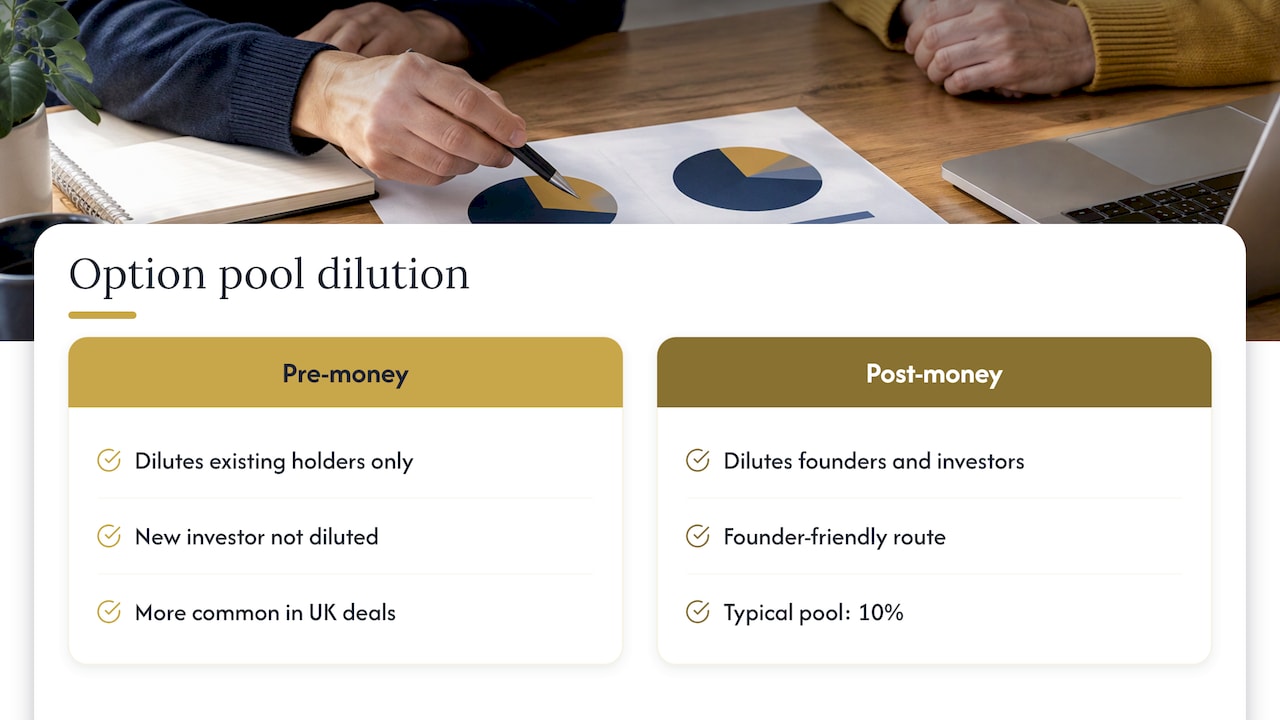
An option pool for future employees can be created pre-money or post-money. GOV.UK term sheet guidance notes that a pre-money pool dilutes existing shareholders only, while a post-money pool dilutes founders and investors alike, and that a typical post-money pool is 10%.
HSBC Innovation Banking describes the same mechanics: a pre-money pool dilutes existing shareholders but not the new investor, whereas a post-money pool spreads the dilution across both and is regarded as the founder-friendly route. Quastels notes that in UK deals the pre-money pool on a fully diluted basis is the more common outcome, meaning the cost falls entirely on founders.
In practice, a pre-money pool lowers your effective pre-money valuation. A £8m headline with a large pool carved out first is worth less to you than the same headline with a post-money pool.
The fully diluted share count
Ashfords describes pre-money valuation as an agreed worth on a fully diluted basis, accounting for all outstanding shares, convertible securities and employee options. If convertibles from an earlier round convert into the new round, they sit inside the pre-money figure and dilute you, not the new investor. Model them before you accept a price.
Anti-dilution protection
If a later round prices lower, investors’ protections come into play. A full ratchet resets the investor’s price to the new lower one, while the broad-based weighted average version is, according to Osborne Clarke, the most common form in UK deals and results in the least dilution for other shareholders. Our checklist of term sheet red flags goes through these clauses in more detail.
Perspective
We see founders spend weeks negotiating a headline valuation and a few minutes on the cap table behind it. That is the wrong way round. A £1m difference in pre-money is easy to see; an option pool, a convertible note or a share count assumption can move your ownership by the same amount without anyone mentioning it.
Our advice is to build the post-round cap table before you answer an offer. Put every offer on the same basis, show the pre-money and post-money figures side by side, and model what the next round does to the stakes. When an investor sees that you understand your own numbers, the conversation about price becomes a conversation between equals.
That is the work a finance lead does, and it is why many of the founders we work with bring in senior financial leadership ahead of a raise, without hiring a full-time CFO. Investor-ready figures are not about making the company look bigger. They are about knowing exactly what you are agreeing to.
Kishen Patel
How to prepare before you negotiate
- Build a clean cap table. List every share class, option, warrant and convertible. Our guide to cap table management and the article on cap table mistakes that stall fundraises cover the usual errors.
- Model dilution round by round. A model that shows ownership after this round and the next lets you test offers quickly. See how to build an equity dilution model and our overview of equity dilution for UK founders.
- Know what your company is worth on its own evidence. If you have no revenue yet, the approach differs; our guide to valuing pre-revenue start-ups explains what investors look at instead.
- Separate the fundraising price from an exit price. The number agreed in a round is a negotiated price for a minority stake. It is not the same as what a buyer pays later, as we explain in fundraising valuation vs exit valuation.
- Ask for the offer in both forms. State pre-money, post-money, the pool size and whether it sits before or after the round.
Support from Consult EFC
If you are preparing to raise, we can help you get the numbers into a shape investors expect. Our team is led by ICAEW Chartered Accountant Kishen Patel and provides fractional CFO support, investor-grade financial modelling and independent valuations. Our business valuation service starts from £2,500 as a one-off fee.

If you would rather have a senior finance lead alongside you through the raise, take a look at our fractional CFO services.
FAQ
What is the difference between pre-money and post-money valuation?
Pre-money valuation is the company’s value immediately before new investment. Post-money valuation is that value plus the amount invested. The gap between them is exactly the size of the round.
How do you calculate pre-money and post-money valuation?
Add the investment to the pre-money figure to get post-money, or subtract it from post-money to get pre-money. If you know the investor’s percentage, divide the investment by it to find post-money. For example, £500,000 for 10% implies a £5m post-money valuation.
Does the investor’s percentage use pre-money or post-money?
Post-money. Ownership is the investment divided by the post-money valuation, so £2m on £10m post-money is 20%. Dividing by the pre-money figure would overstate the stake.
Is a higher pre-money valuation always better for founders?
It means you sell a smaller share for the same cash, which usually helps. But it should be read with the option pool, convertibles and later-round protections, because these can change your effective ownership. Compare offers on a fully diluted, same-basis view.
Do founders lose value when they are diluted?
Dilution reduces your percentage, but not necessarily the value of your stake. In the British Business Bank’s example, founders keep the same number of shares and hold 80% of a company valued at £5m rather than 100% of a smaller one.
Sources
- HSBC Innovation Banking: what is equity dilution
- HSBC Innovation Banking: employee option pools
- British Business Bank: what is a term sheet
- Angel Capital Association: valuing pre-revenue companies
- Redfern Legal: negotiating venture capital transactions
- Ashfords: how pre-money valuation shapes your funding round
- Wise: pre-money vs post-money valuation in start-up funding
- GOV.UK: term sheet key points and guardrails
- Quastels: start-up term sheet guide
- Osborne Clarke: UK term sheets explained for founders
Recommended
- Business Valuation for Pre-Revenue Start-ups (2026 Guide)
- The Complete Guide to Business Valuation Methods: What Every CFO Needs to Know in 2025
- Management Buyout Valuation: Biggest Mistakes Owners Make
- Independent Business Valuation: Answering Tough Investor Questions
This article is for general information only and is not professional advice.
Not sure where your business stands right now?
Book a free 30-minute call with Kish. Bring your numbers, your questions, or just your situation. You will leave with a clearer picture than you arrived with.
Book a Free Strategy Call
Over 12 years across Big Four audit, Investment Banking, and corporate advisory. Kish works with SaaS founders, tech companies, and ambitious UK SMEs from £1M to £50M in revenue on fundraising, valuations, exit planning, and financial strategy. ICAEW regulated. Big Four trained. Based in London.